
The column nobody reads until the upload fails
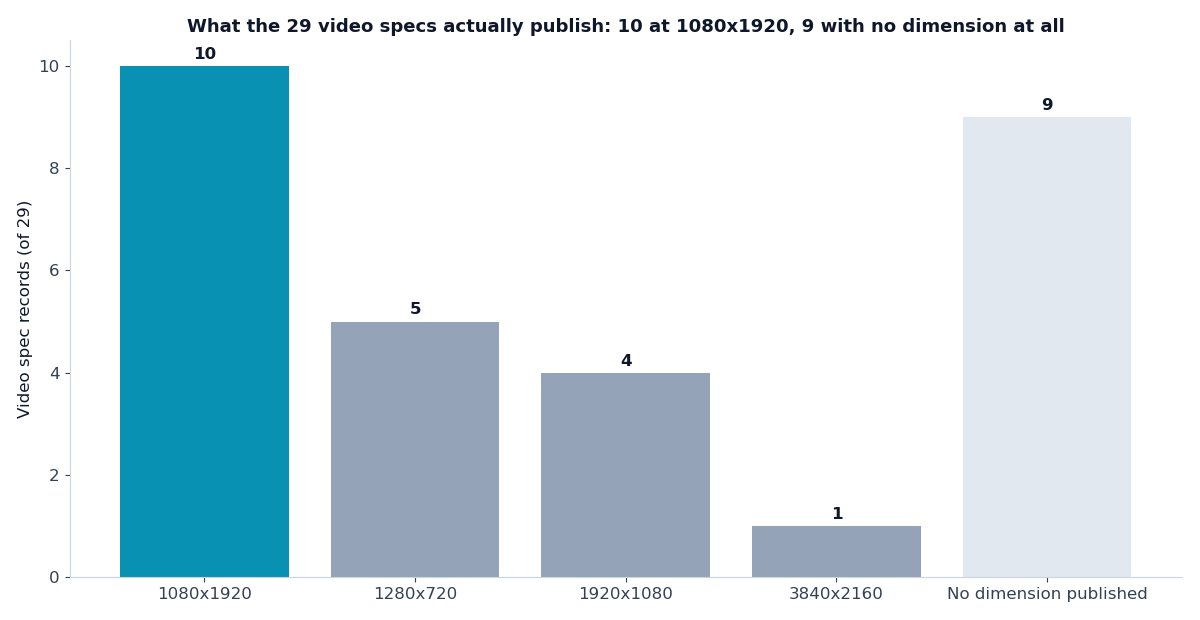
Every size guide leads with dimensions, and dimensions are the easy part: ten of the 74 specs in our platform database, verified in September 2026, sit at exactly 1080x1920. File size is where the platforms actually diverge. Only 32 of the 74 specs publish a maximum file size at all, and the published values run from 0.1 MB to 262,144 MB, which is YouTube's 256 GB standard-video allowance wearing its megabytes.
The ends of the scale
The smallest limit in the database is not a video at all: Facebook's cover photo caps at 0.1 MB, a limit Snappa's cover guide echoes with its fastest-loading advice of a JPG under 100 KB. At the working end, Facebook feed video allows 4 GB and LinkedIn feed video 5 GB; PostFast's quick reference, one of the winning guides for this site's queries, lists Facebook Stories and Reels at 4 GB and YouTube Shorts under the same 256 GB umbrella as standard uploads. A 4 GB reel and a 100 KB cover photo live on the same platform, six orders of magnitude apart.
Why the limits differ so much
The cap tracks the slot's job. Discovery surfaces that autoplay in a feed keep files lean so the next video starts instantly; libraries and archives accept bulk because the viewer chose to be there. It also tracks who pays for the bandwidth, which is why ad specs and organic specs on the same platform sometimes publish different numbers, and why 42 of our 74 specs publish no maximum at all: the practical limit there is the app's patience, not a documented rule.
Check size before you export, not after
The export preset that ends the argument is the platform's documented cap read before rendering, matched with a duration and dimension check from the same row of the spec sheet. The Story Frame Maker linked from this blog builds to 1080x1920 by construction; the file-size check is the one creators still do by hand, usually at 2 a.m., watching an upload bar restart.