The limit with the fewest published values
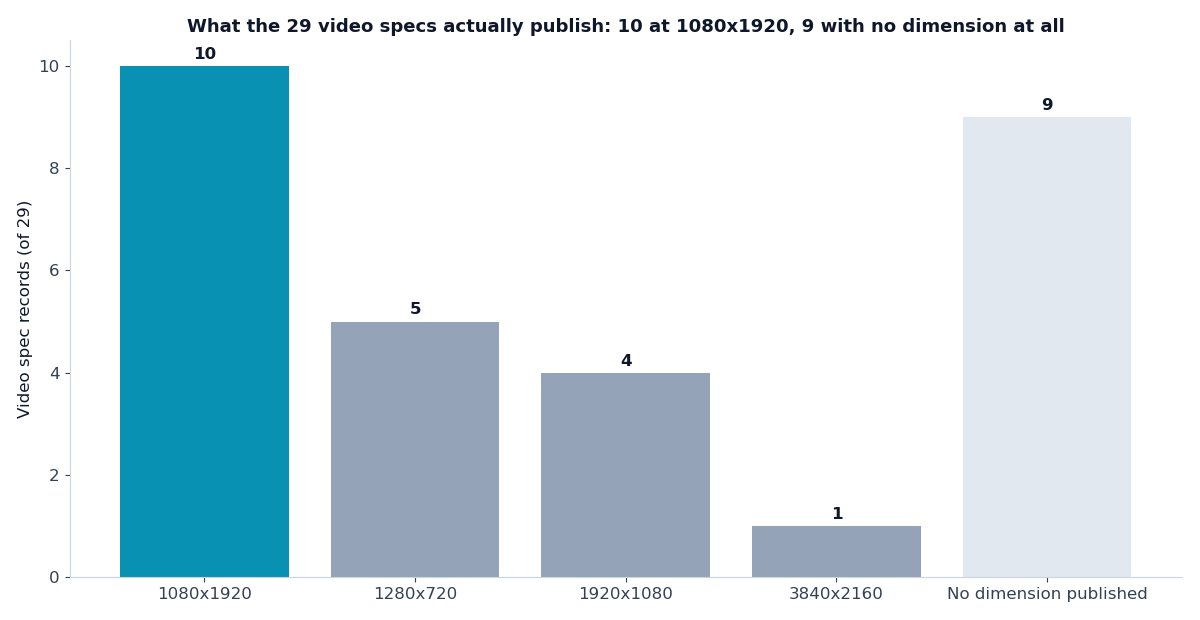
Dimensions are published everywhere and file sizes on 32 of our 74 specs, but duration is the shy column: only 17 specs in the database state a maximum. The four vertical formats a creator uses daily state four different ones. Instagram Stories cap at 60 seconds, Facebook Stories at 120, YouTube Shorts at 180, and Instagram Reels at 1,200 seconds, twenty minutes wearing a short-form costume.
Why the same shape has four clocks
The caps encode what each surface is for. A story is a tap-through unit, priced in seconds of attention; Instagram's 60 seconds is four 15-second segments, a structure its own guides describe. Facebook doubled the story clock to 120. Shorts began as a 60-second answer to TikTok and stretched to 180 as the format matured. Reels stretched furthest, to 20 minutes, because Meta wants long viewing sessions inside the same surface. The pixel count converged across all of them; the clocks did not, because the clocks are business decisions, not physics.
The guides disagree because the surfaces move
Winner guides verified for this site's queries state durations that differ by edition: one Instagram guide lists a 15-second video maximum, describing the per-segment display, while the platform's spec row records the 60-second upload structure. Both are usable numbers for different questions, which is why a duration should always be quoted with its surface and its date. Our database rows carry their September 2026 verification dates for exactly this reason.
Plan the edit to the shortest clock you need
Cross-posting one vertical video everywhere means editing to the strictest destination: a 55-second cut fits every flagship surface in the database, a 150-second cut leaves Instagram Stories behind, and anything past three minutes is a Reels-and-Shorts-only piece. Decide the surfaces first; the clock then decides the cut, not the other way around.